 Gold Jewellery
99.99%Live Sell Price, per troy ounce
$5,683.77
- Per Kilogram
- $182,737.18

Have gold rings, chains, bracelets or earrings you no longer wear? Speak with 24 Gold Group Ltd. in Toronto about selling individual pieces, broken jewellery or a mixed collection.
You do not need to know the karat before calling. Describe what you have and any visible markings so our trading floor can explain the next steps.
Gold JewelleryLive Sell Price, per troy ounce
$5,683.77
Ask our team about rings and wedding bands, necklaces, chains, bracelets, earrings and pendants. Broken chains, mismatched earrings and damaged pieces may also be suitable for assessment.
Acceptance depends on the material and current buying requirements. If your collection includes plated, gold-filled or unmarked items, mention these before arranging a visit.
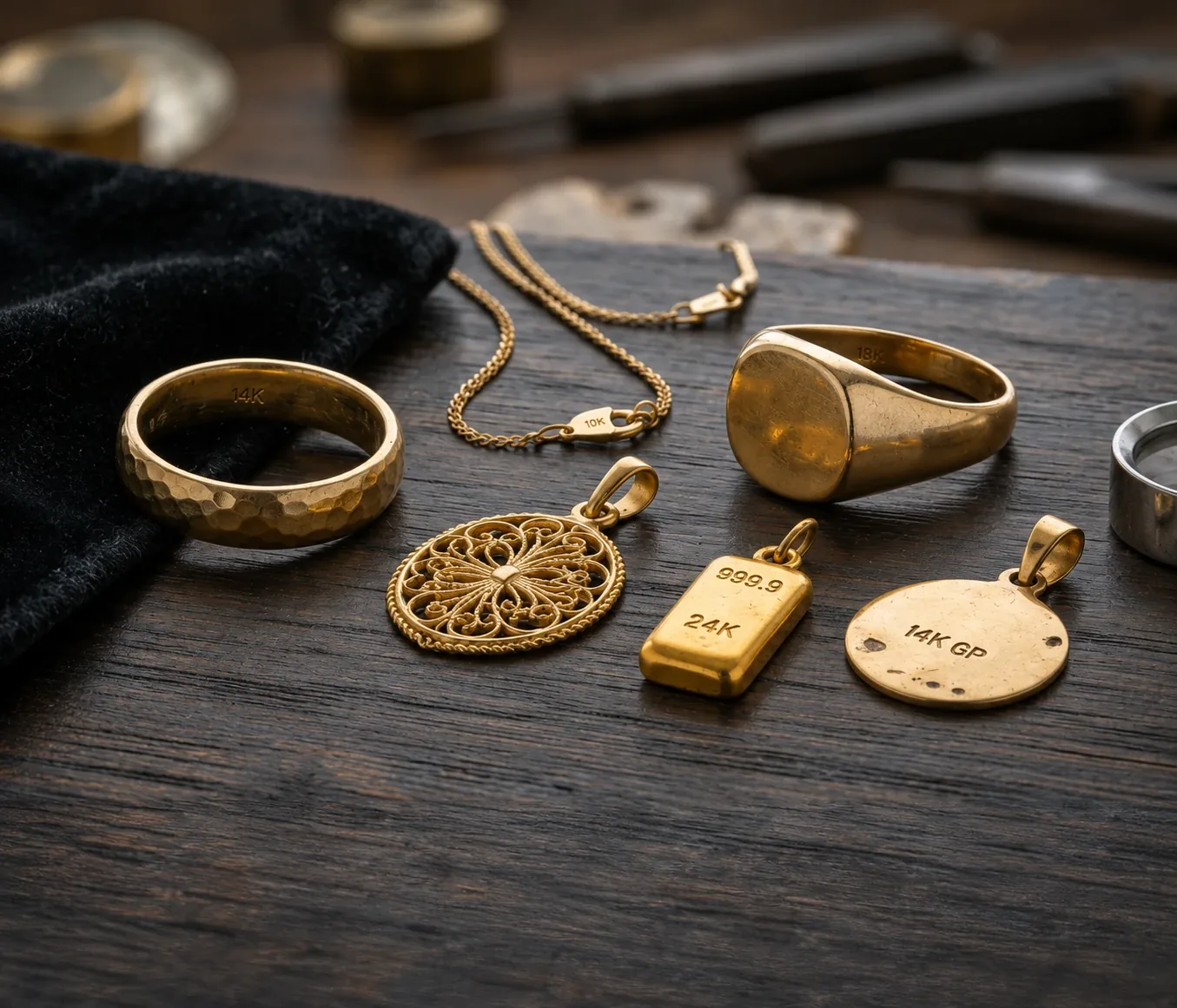
A piece’s total weight is not necessarily its gold weight. Jewellery often contains gold alloyed with other metals, while stones, clasps, springs and other components can contribute weight without adding equivalent gold content.
An assessment needs to establish the relevant metal weight and purity. Ask how non-gold components are treated, what rate applies and whether any deductions affect the final offer.
If you are checking buying-price references beforehand, make sure the rate corresponds to the jewellery’s purity rather than comparing the whole item with a fine-gold rate.
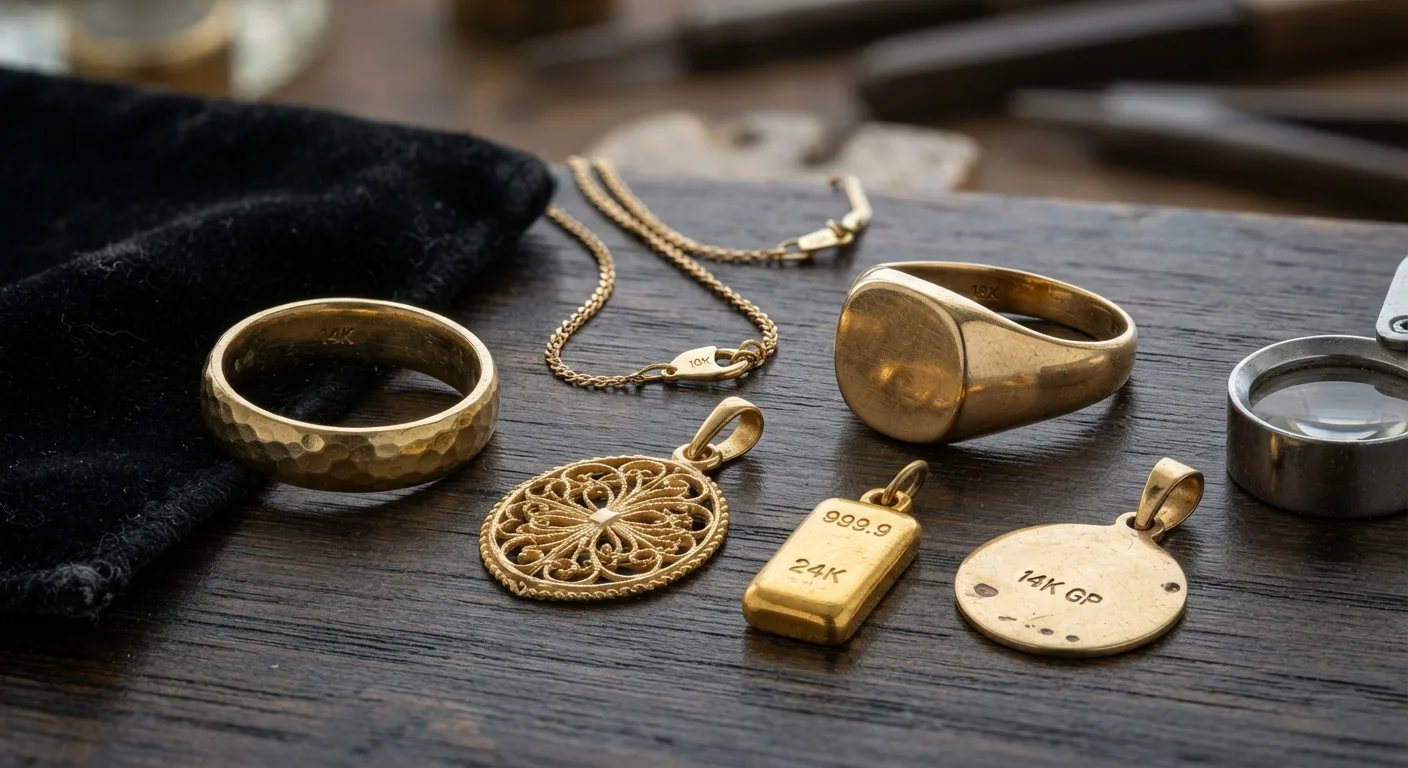
Look for marks such as 10K, 14K, 18K, 22K or 24K. These indicate different proportions of gold: an 18K piece, for example, has a higher stated gold proportion than a 14K piece of the same weight.
Marks can be worn, missing or inaccurate, so they are a starting point rather than proof of composition. Gold-plated and gold-filled jewellery differ from solid gold alloys and should be identified separately where possible.
There is no need to guess. Tell our team what you can see and ask how purity will be verified.
Keep your pieces intact. Do not remove stones, cut chains or dismantle settings before discussing the assessment with our team.
Group gold jewellery apart from silver, platinum and costume jewellery where possible.
Record karat stamps and maker’s marks, including any you cannot identify.
Leave matching pieces together when useful for identifying or describing them.
Prepare a short inventory and clear photographs if you have several items.
Ask about accepted items, identification and whether an appointment is needed.
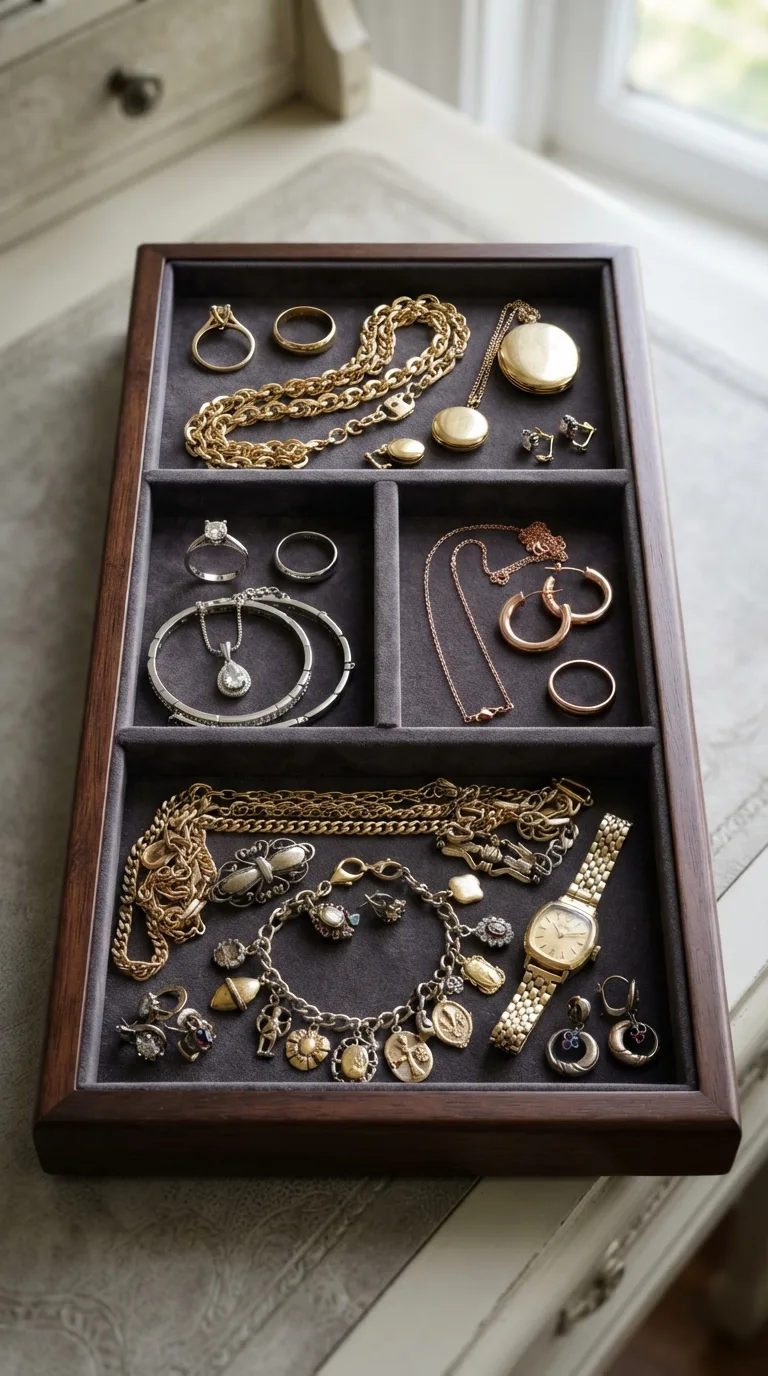
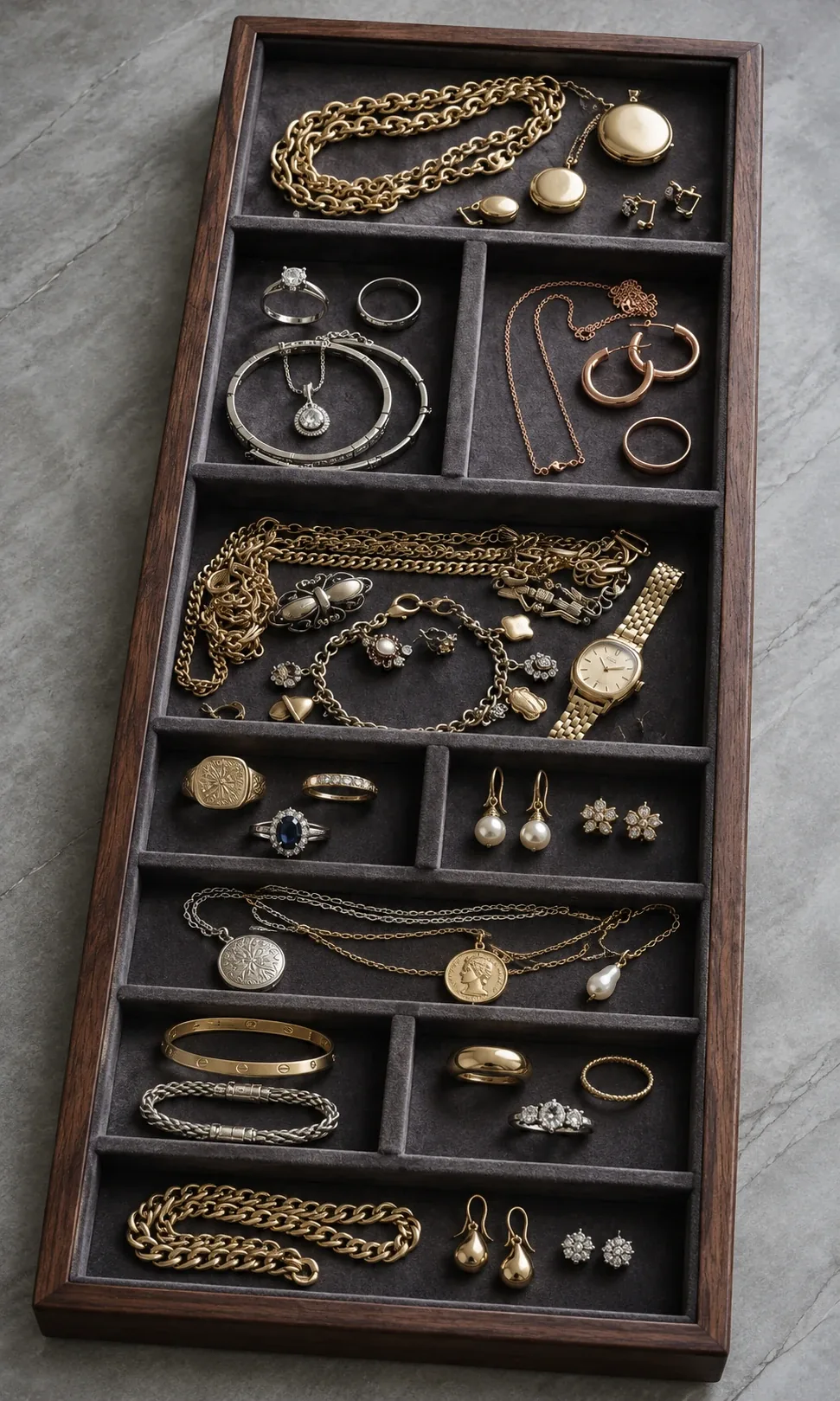
A gold-content assessment may not capture a piece’s designer, antique or collectible value. Sentimental importance is also separate from the amount of gold it contains.
Mention maker’s marks, provenance or a previous appraisal before agreeing to a metal-based offer. Keep any supporting documents with the piece, and consider a specialist jewellery valuation if you want those features assessed separately.
An absent mark does not establish whether an item is gold. Describe the piece to our team and ask what assessment is needed to determine its composition.
Do not assume a gold-based offer includes gemstone value. Ask how stones will be assessed, whether they are included in the purchase and what happens to them if you proceed.
Tell our team which marks are present and whether any pieces are unmarked. Ask how the different purities will be assessed and reflected in the offer.
There is no need to alter a piece simply to make an initial enquiry. Leave it intact and ask whether any preparation is required, especially for antique or designer jewellery.
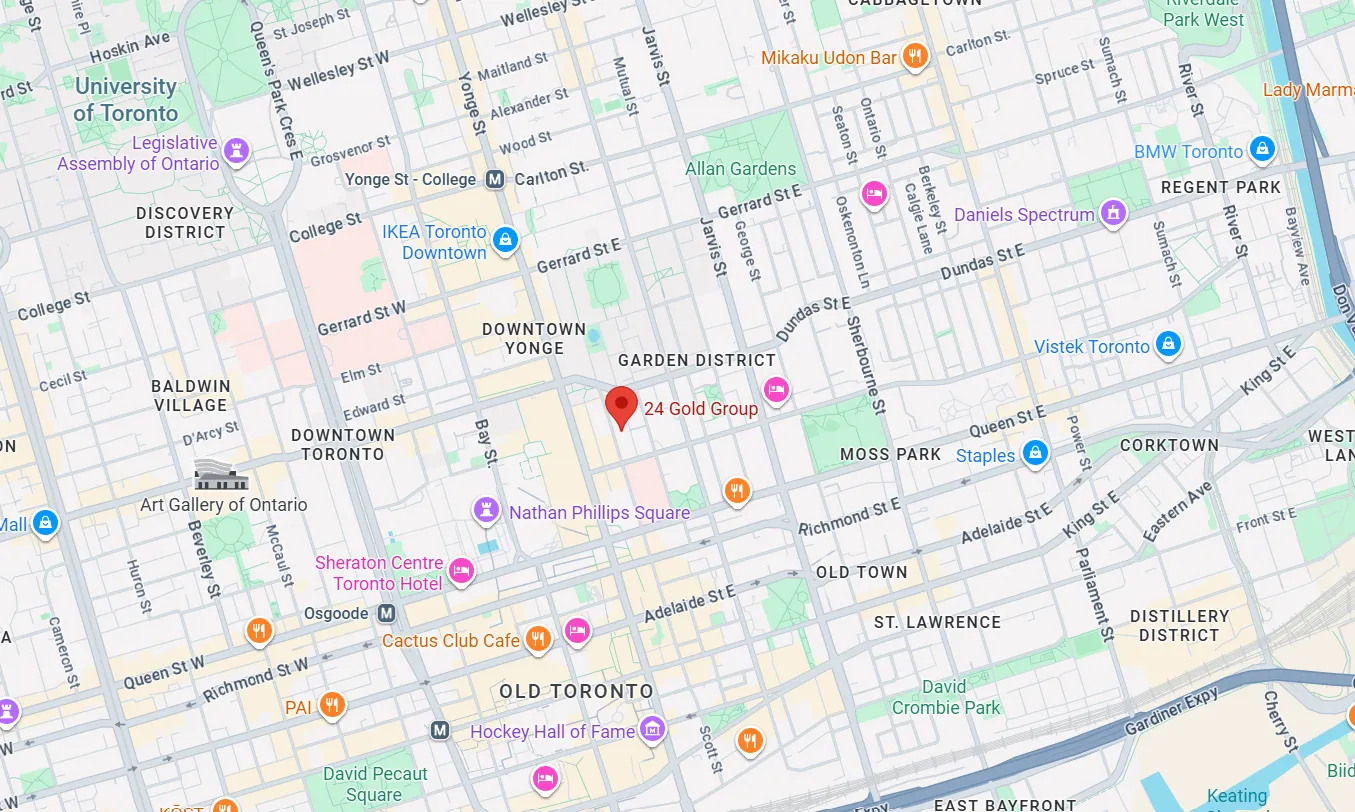
 24 Gold Group Ltd.
 Business hours:
 Phone:
 Email:

 Check Metal Prices
 Call the Trading Floor